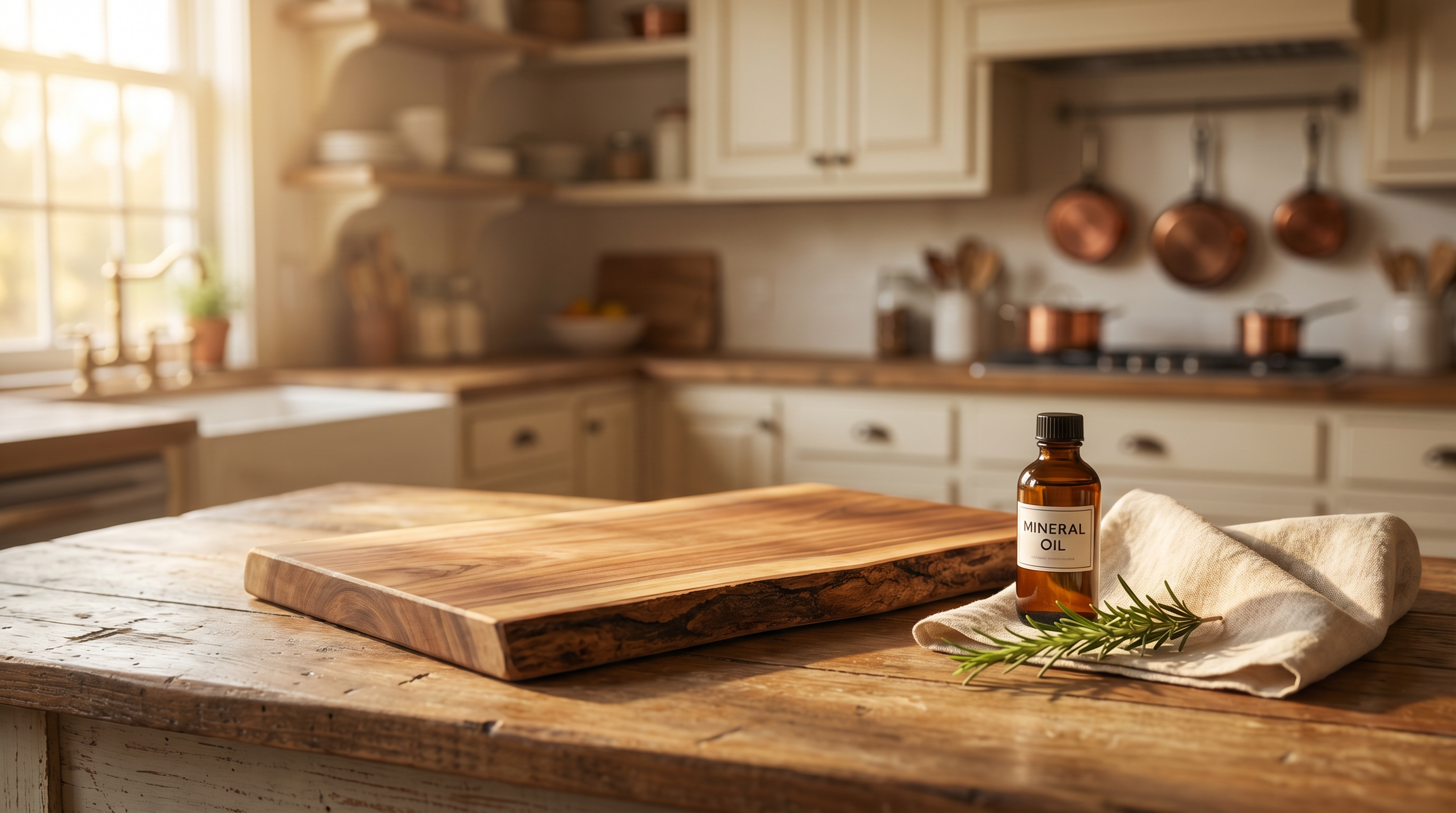
A handcrafted wood cutting board is one of the most beautiful — and hardest-working — pieces in your kitchen. But unlike a ceramic plate or a stainless pan, wood is alive. It breathes. It drinks in moisture. And without a little care, even the finest acacia or walnut board can dry out, warp, or crack in a single season.
Thank you for reading this post, don’t forget to subscribe!
The good news? Keeping your cutting board in heirloom condition is easier than most people think. In this guide, we’ll walk through exactly how to clean, oil, and protect a wood cutting board — the same way we care for every board that leaves our California workshop.
Why Wood Cutting Boards Need Oil (and What Happens When They Don’t)
Wood is porous. Every time you rinse your board, wash it with soap, or slice into a juicy tomato, a little bit of moisture seeps into the grain — and a little bit of the wood’s natural oils seep out.
Over time, that loss of oil makes the wood brittle. Brittle wood develops micro-cracks. Micro-cracks trap bacteria, hold onto stains, and eventually turn into the deep splits you see on neglected boards.
Regular oiling solves all of that. A well-oiled board:
- Repels water instead of absorbing it
- Resists stains from beets, berries, and turmeric
- Stays smooth and gentle on your knife edges
- Looks richer and more beautiful the longer you own it
Think of oiling as conditioning leather — it’s the single habit that separates a board that lasts six months from one you’ll pass down to your kids.
The Only Two Oils You Should Ever Use
This is where most people go wrong. Scroll through any kitchen forum and you’ll see folks recommending olive oil, coconut oil, or “whatever’s in the pantry.” Don’t do it. Cooking oils go rancid inside the wood — leaving your board smelling sour and actively harboring bacteria.
Stick to these two food-safe finishes:
1. Food-Grade Mineral Oil
Odorless, tasteless, and completely inert, food-grade mineral oil (sometimes labeled “white mineral oil”) is the gold standard for cutting board care. It soaks deep into the grain, never spoils, and is FDA-approved for food contact.
2. Board Cream (Mineral Oil + Beeswax)
Once your board is fully saturated with oil, a beeswax-based board cream locks that moisture in and adds a soft, water-beading sheen. It’s the finishing touch that makes a board feel buttery-smooth under your fingertips.
Everything else — vegetable oil, olive oil, linseed oil, raw coconut oil — belongs in the pantry, not on your board.
The 4-Step Cutting Board Care Routine
Step 1: Clean Gently After Every Use
Rinse the board under warm (not hot) water and scrub with a few drops of mild dish soap and a soft sponge. Never soak it, never run it through the dishwasher, and never leave it flat in a puddle of water. Both sides need to air-dry evenly — standing the board on its edge is ideal.
Step 2: Deodorize When Needed
Garlic, onion, and fish can leave lingering smells. Sprinkle coarse salt across the surface, then scrub with half a lemon. The salt lifts odors while the citric acid neutralizes them. Rinse, pat dry, and let it finish drying overnight.
Step 3: Oil the Board
Pour a generous amount of food-grade mineral oil onto the surface and spread it evenly with a clean, lint-free cloth. Don’t be shy — the wood will tell you when it’s had enough. Let the oil soak in for at least a few hours (overnight is better), then wipe off any oil the board didn’t absorb.
How often? The rule of thumb we give every customer: once a day for a week, once a week for a month, once a month forever. In dry climates or winter heating season, bump that up.
Step 4: Finish with Board Cream
After the oil has fully absorbed, rub a thin layer of beeswax-based board cream into the grain with a soft cloth. Buff it in small circles until the surface has a warm, matte glow. This wax layer is what makes water bead up and roll off — the signature sign of a well-loved board.
What to Do If Your Board Is Already Dry or Stained
Don’t panic — wood is forgiving. Here’s the recovery routine:
- Sand lightly with 220-grit sandpaper, always going with the grain. This removes surface stains and reopens the pores.
- Raise the grain by wiping the board with a damp cloth, letting it dry, then sanding one more time with 220-grit. This prevents fuzzy rough spots after the first oiling.
- Flood with mineral oil — apply, wait an hour, apply again. Keep going until the wood stops drinking it in.
- Seal with board cream once the oil has fully cured (usually 24 hours).
A board that looked ready for the trash can usually be brought back to life in a single afternoon.
The Small Habits That Double a Board’s Lifespan
- Use both sides. Rotating keeps wear even and helps prevent warping.
- Dry upright. Laying a wet board flat traps moisture on one face and pulls it crooked.
- Keep it away from heat. Never set a board near the stove, dishwasher, or a sunny windowsill — dry heat is the #1 enemy of wood.
- Use a dedicated cutting side and keep the other side pristine for serving. A personalized board with a smooth presentation face (like our Personalized Marble & Acacia Cutting Board) can transition straight from prep to charcuterie.
Choosing a Board Worth Taking Care Of
A cheap big-box board will warp no matter how perfectly you oil it. A well-made board from dense, close-grained hardwood — acacia, maple, walnut — will reward every drop of care you give it for decades.
If you’re starting fresh or upgrading, a few favorites from our best sellers:
- The Long Acacia Cutting Board with Handle — a generous everyday workhorse with gorgeous grain.
- The Acacia Personalized Cutting Board with Handle — engraved with a name, date, or monogram for housewarming and wedding gifts.
- The California Shaped Cutting Board with Ocean Epoxy — a true statement piece that’s as beautiful on a serving board as it is a dinner centerpiece.
Pair any of these with a Personalized Wooden Wine Box and you have a realtor closing gift or housewarming set that people actually remember.
The Bottom Line
Oiling a wood cutting board takes about two minutes a month. That small habit is the difference between a board that cracks in a year and one that turns into a family heirloom.
Buy a bottle of food-grade mineral oil. Keep a little tin of board cream near the sink. Give your board the care it deserves, and it will thank you with decades of beautiful, hardworking service.
Every cutting board we craft at Sierra Fine Decor is hand-finished in Lincoln, California, and ships with care instructions so you can keep it gorgeous for life. Explore our best sellers →