Kitchen Counter Organization Ideas That Actually Look Good (And Hide Nothing You Use Daily)
Most kitchen counter “organization” advice tells you to hide everything in a drawer. The problem is, you’ll just take it back out tomorrow morning to make coffee. The kitchens that look beautiful AND function — the ones in every Pinterest save and Houzz feature — don’t hide their daily-use items. They display them well. Here are seven kitchen counter organization ideas that keep your essentials right where you use them, and somehow make the whole kitchen feel calmer.
Thank you for reading this post, don’t forget to subscribe!
Start with the One Rule That Changes Everything
Before any specific tip, there’s a single principle that separates a cluttered counter from a styled one: every item earns its spot in two ways — by being used at least weekly, AND by looking good enough to display. If a thing fails either test, it goes in a cabinet. If it passes both, it stays out, and you style it on purpose.
That single rule cuts most counter clutter by half before you even start arranging.
1. Build a Coffee or Tea Station (Your First Daily Zone)
Coffee is the heaviest-traffic micro-zone in most kitchens. Instead of fighting it, lean in. A small dedicated tray or wood board claims the space, contains the visual mess, and turns the whole corner into a “moment” rather than clutter.
What goes on the station
Machine or kettle, a small canister of beans or tea, two or three favorite mugs displayed (not stacked), a tiny vase or trailing plant for softness. That’s it. Sugar packets, stirrers, and the rest go in a drawer.
Why a wood board works
A warm wooden surface visually contains the zone and protects the counter from drips. A handcrafted board like our long acacia cutting board with handle doubles as a coffee station base by day and a cheese board by night — function plus beauty in one piece.
2. Use a Tray to Corral Oils, Vinegars, and Salts
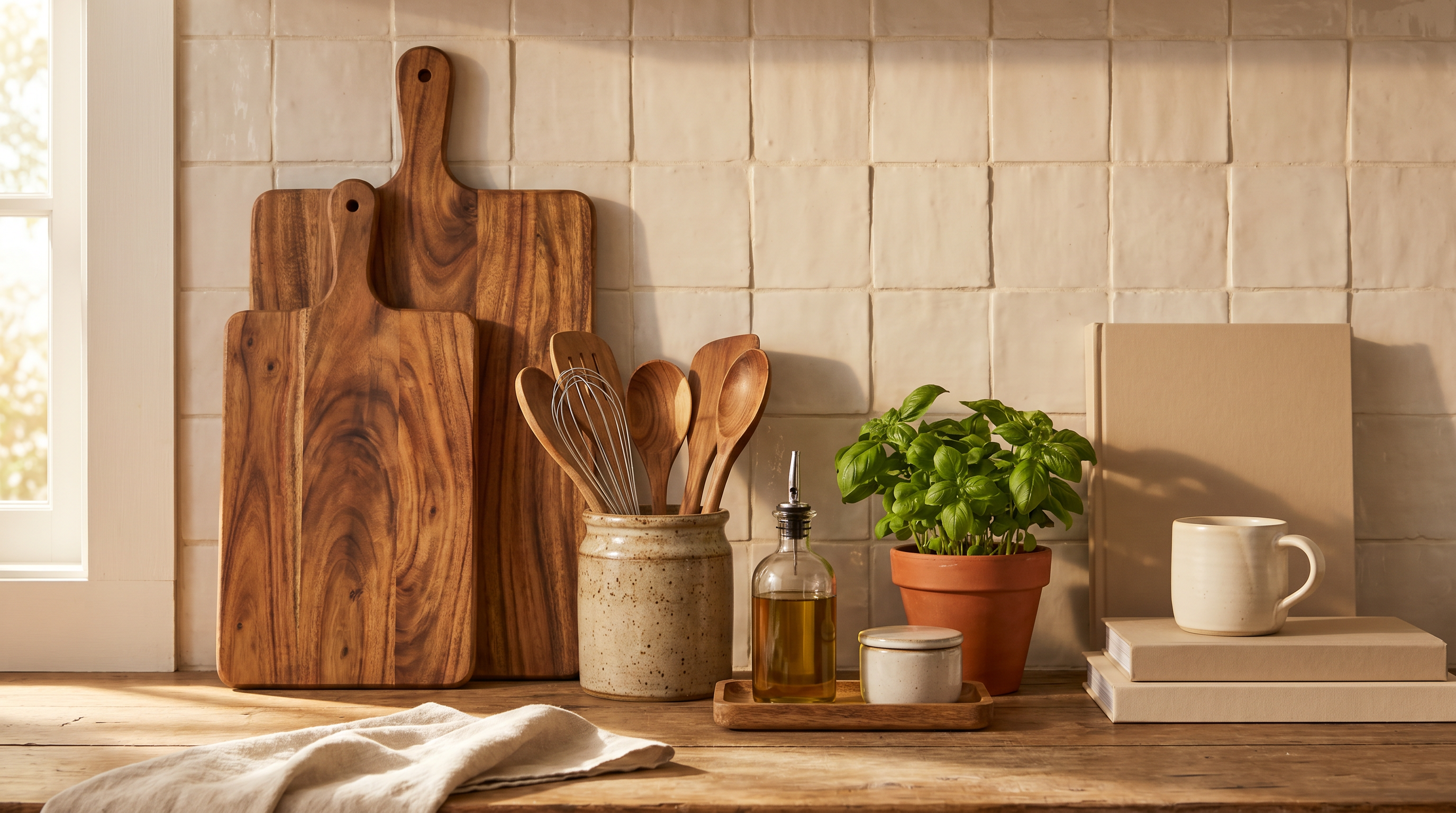
The oils and vinegars next to the stove are some of the most-used items in any kitchen — and the most likely to get sticky and scattered. Group them on a single tray or board and the whole stove area instantly looks intentional.
Pick three to five favorites
Olive oil, neutral oil, one good vinegar, flaky salt, and pepper grinder. Anything you reach for less than weekly belongs in a cabinet. The tray makes them look like a curated set instead of a collection of bottles.
Bonus: cleanup gets easier
Wipe the tray once a week instead of cleaning around five separate bottles. Small wins add up.
3. Display Cutting Boards Vertically (Don’t Stack Them)
Cutting boards are simultaneously the most-used kitchen tool and the most beautiful item most people own — yet they’re usually shoved flat in a cabinet where you can’t see them and forget you have them. Lean them upright against the backsplash and they become decor.
Mix scale and finish
One large board (acacia, maple, or walnut), one medium personalized piece, one statement piece for entertaining. The mix of sizes creates visual rhythm. The California epoxy cutting board is the showstopper that draws every guest’s eye when leaned upright. The personalized marble and acacia board adds a softer, more sophisticated note to the same vignette.
Daily-use boards earn the front spot
Your most-used cutting board lives at the front of the lineup, easy to grab. The pretty ones go behind. They’re still visible, but the workhorse is closest to hand.
4. Group Utensils in a Single Beautiful Crock
One ceramic, stoneware, or wood crock by the stove holds the spatulas, wooden spoons, and whisks you actually use every day. The rest stay in a drawer. This is a small change that saves multiple seconds every time you cook AND looks intentional instead of crowded.
Edit ruthlessly
If you have nine spatulas in the crock, you probably use two. The other seven go in a drawer (or out the door). The crock should look balanced, not stuffed.
Match the warmth
A stoneware or wood crock works in almost any kitchen. Avoid stainless or plastic if your goal is a softer, lived-in look — the material of the holder matters as much as what’s in it.
5. Use Open Wall Space, Not Counter Space
The counter has a finite footprint. The walls don’t. Open shelves, a small ledge, or a single floating shelf above the counter pulls items off the work surface while keeping them within reach.
Three things only
A small shelf above your prep zone holds three things, max: a cookbook stand, a small plant or herb pot, and one beautiful piece — a wood bowl, a ceramic pitcher, a single vase. Resist the urge to fill it.
Hooks beat baskets for small kitchens
A few hooks under a shelf for measuring cups, mugs, or a dish towel adds storage without footprint. Especially helpful in small kitchens where every inch counts.
6. Create a Soft Landing Zone
Kitchens collect the things that have nowhere else to go — keys, mail, the day’s grocery receipt. Instead of letting them scatter, create one designated landing zone on a small tray or wood plank. Everything that doesn’t belong in the kitchen lives there until it gets put away at the end of the day.
This single trick keeps the rest of the counter clean and signals “the kitchen ends here.”
7. Always Leave 50% of Your Counter Empty
The most beautifully organized kitchens follow one quiet rule: at least half of the counter surface is always empty. Not because the homeowner has less stuff — because they made deliberate choices about what gets to live on the surface.
The “morning test”
Wake up tomorrow and look at your counters. Anything that wasn’t used in the last 7 days goes in a cabinet — even if it’s pretty. You can rotate it back in next week. Your daily-use items get the breathing room they deserve.
Negative space reads as luxury
This is what designers know: a clear stretch of countertop is the visual equivalent of silence in music. It lets the styled pieces actually shine.
Quick Cheat Sheet by Kitchen Size
Small kitchen (under 8 feet of counter)
One zone (coffee OR oils, not both on display), one cutting board leaned, utensil crock, soft landing tray. Use vertical space aggressively — open shelf above for everything else.
Medium kitchen
Coffee station, oils tray near stove, two or three cutting boards leaned, utensil crock, one landing tray. Half the counter empty.
Large kitchen or island
All of the above, plus a styled vignette on the island — a wooden bowl with fruit, a small plant, a stack of two cookbooks. The island is the room’s centerpiece, treat it like one.
The Pieces That Earn Their Spot
Kitchen counter organization isn’t about minimalism for its own sake — it’s about choosing pieces that are beautiful enough to live out, and useful enough to keep using. Handcrafted wood boards, a warm stoneware crock, one good tray, one good plant. Build slowly. Edit often.
If you’re starting from scratch and want to invest in pieces that look good leaned upright AND get used daily, our best sellers are the workhorses customers reach for most. Each is handcrafted in California from solid hardwoods — the kind of pieces that earn a permanent spot on the counter and make the whole kitchen feel a little calmer every time you walk in.