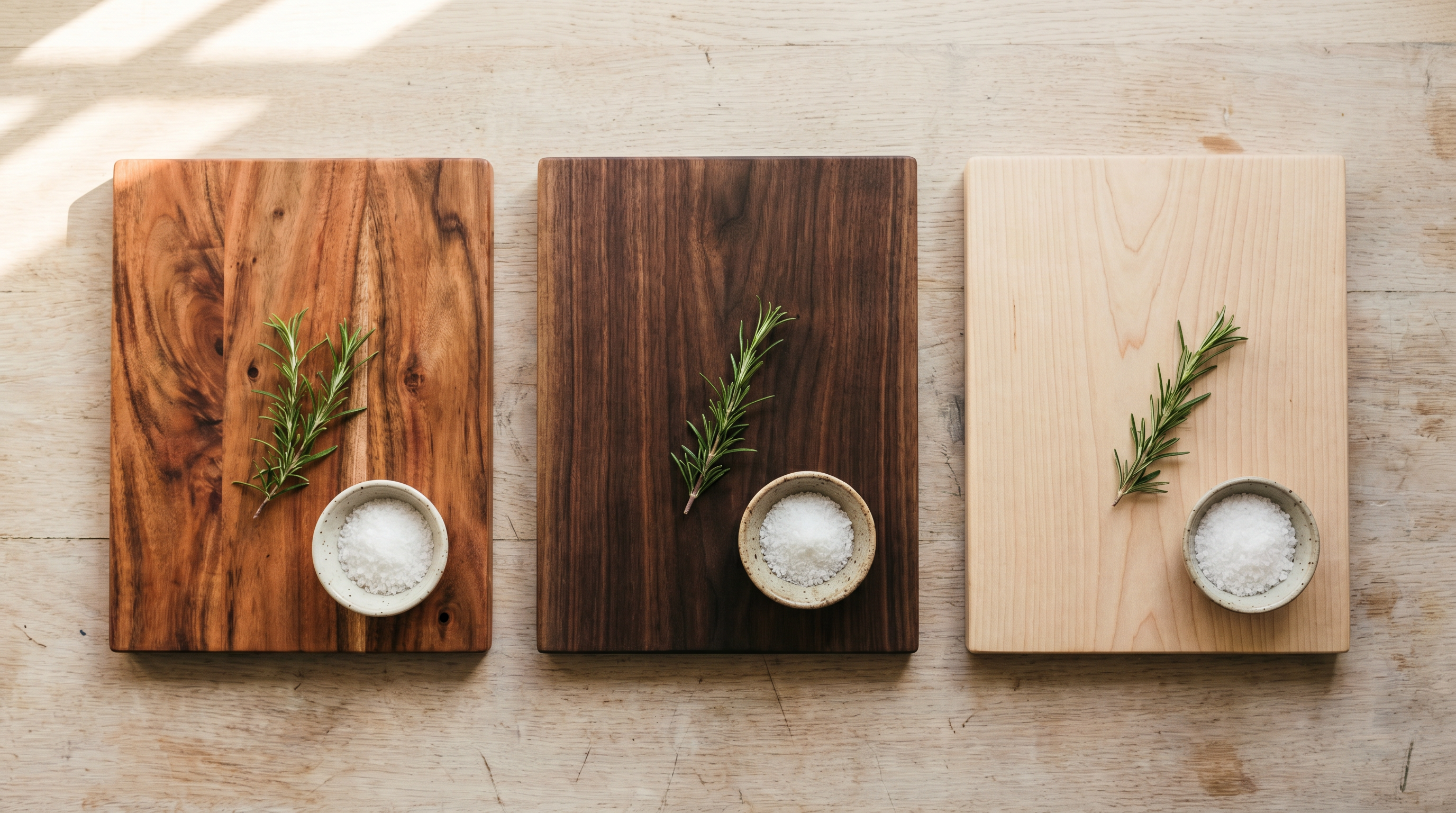
Acacia vs. Walnut vs. Maple: How to Choose the Right Cutting Board Wood (Without Overthinking It)
You’re standing in the kitchen aisle — or scrolling through fifty browser tabs — wondering whether acacia, walnut, or maple is the smarter pick for your next cutting board. They all look beautiful in photos. They all promise durability. And they all come with strong opinions from chefs, woodworkers, and that one friend who treats their cutting board like a member of the family.
Thank you for reading this post, don’t forget to subscribe!
Here’s the good news: there’s no single “best” wood. There’s only the best wood for your kitchen, your knives, and how often you actually use the thing. Let’s break down what really separates these three favorites so you can pick with confidence — and skip the buyer’s remorse.
The Quick Verdict (For People in a Hurry)
If you want the short answer before we get into the details:
- Acacia — Best for daily use, beautiful grain, naturally water-resistant, gentle on most budgets.
- Walnut — Best for show-stopping presentation, knife-friendly, rich dark color, slightly higher maintenance.
- Maple — Best for heavy chopping, professional kitchens, tight grain, classic light look.
Still with us? Good. The details below will help you choose — and explain why our best-selling boards lean heavily on acacia and walnut.
What Actually Matters in a Cutting Board Wood
Before comparing species, it helps to know what wood traits matter most in real-world use. Forget the marketing copy — these four traits do all the heavy lifting.
1. Hardness (Janka Rating)
The Janka scale measures how much force it takes to dent a wood. The sweet spot for cutting boards is roughly 900–1,500. Too soft and your knife marks pile up fast. Too hard (looking at you, bamboo) and your knife edges suffer.
2. Grain Tightness
Tight, closed grain resists moisture, bacteria, and food staining. Open-grained woods like oak look gorgeous but harbor more debris over time.
3. Natural Oils
Some woods produce natural oils that repel water and resist bacteria. This matters more than most buyers realize — it dictates how often you’ll need to recondition the board.
4. Aesthetic Personality
You’ll see this board on your counter every single day. Color, grain pattern, and warmth genuinely matter — especially if it doubles as a serving piece (which, let’s be honest, ours usually do).
Acacia: The Everyday Workhorse
Acacia is the wood that quietly became the favorite of home cooks who actually use their boards. It’s hard but not brutal on knives, naturally water-resistant thanks to its built-in oils, and grain-wise it’s one of the most photogenic woods you can put on a kitchen counter.
Why we love it for handcrafted boards
- Naturally antibacterial — those oils do real work
- Stunning warm reddish-brown grain that no two boards share
- Sustainably grown and harvested
- Forgiving with both knife edges and busy weeknight cooks
Our long acacia cutting board with handle and personalized acacia cutting board are two of our most-requested pieces — and for good reason. Acacia just works for the way most people actually cook.
One small caveat
Acacia varies in density depending on where it’s grown. Cheap, mass-produced acacia boards can warp or split. Handcrafted boards from a small workshop (like ours in California) are dried and oiled properly, which makes a real difference in lifespan.
Walnut: The Statement Piece
Walnut is what you reach for when you want a cutting board that’s also a centerpiece. The deep, almost chocolate-brown color reads as upscale immediately. It’s softer than acacia, which makes it gentler on knife edges, but it does mean knife marks show up faster over time.
Where walnut shines
- Beautiful dark color that pairs with almost any kitchen palette
- Softer on knife edges — chefs love this
- Reads as premium when it sits on a counter or buffet
- Pairs beautifully with mixed-material designs (think marble or epoxy accents)
If you love the look of dark wood with a luxe finish, our personalized marble and acacia board blends warmth and contrast in a way you don’t get from any single-wood piece. And our California epoxy cutting board offers that same statement-piece feel with one-of-a-kind river-style detailing.
Maintenance reality check
Walnut benefits from more frequent oiling — once a month is a good rhythm if you use it weekly. It rewards the attention with a depth of color that only gets richer with age.
Maple: The Professional Standard
Walk into almost any restaurant kitchen and the cutting boards are maple. There’s a reason. Hard maple’s tight, closed grain is exceptionally hygienic, and it stands up to heavy daily chopping without complaining.
Why pros love maple
- Tight, closed grain resists bacteria and stains
- Excellent durability under heavy use
- Light, neutral color that disappears into any kitchen
- Affordable for the performance you get
The trade-off
Maple is functional and beautiful in a clean, minimalist way — but it doesn’t have the visual personality of acacia’s wild grain or walnut’s rich darkness. If your board lives in a drawer between uses, this is a non-issue. If it sits out as part of the kitchen’s aesthetic, you may want something with more character.
So Which Cutting Board Wood Should You Actually Buy?
Here’s how we’d think about it if you walked into our workshop today:
- Cooks daily, wants beauty and easy care → Acacia, every time.
- Wants a heirloom-feel statement piece → Walnut or a mixed walnut/marble board.
- Heavy-duty chopping, doesn’t care about looks → Maple.
- Gift for someone who hosts a lot → A personalized acacia or marble board — they’ll cry a little.
And honestly? Most well-stocked kitchens benefit from owning two: a workhorse acacia for daily prep, and a stunning walnut or epoxy piece for serving boards, charcuterie, and the inevitable moment someone asks where you got it.
A Note on Care (Because Wood Choice Is Only Half the Story)
The best cutting board wood in the world won’t last if you toss it in the dishwasher or leave it sitting in standing water. A monthly mineral oil treatment, hand-washing only, and air drying upright will keep any of these woods looking new for a decade or more. We handcraft every board in our Lincoln, California workshop with food-safe finishes, so you’re starting from a properly sealed surface — but the long-term care is up to you.
If you’re shopping for a gift (or, let’s be real, treating yourself), browse our handcrafted cutting board collection — and don’t hesitate to reach out if you want help choosing between woods. Picking the right cutting board should feel like picking the right knife: personal, considered, and made to last.